
3 Tips for Combating Seasonal Body Image and Cultivating Body Neutrality Year Round
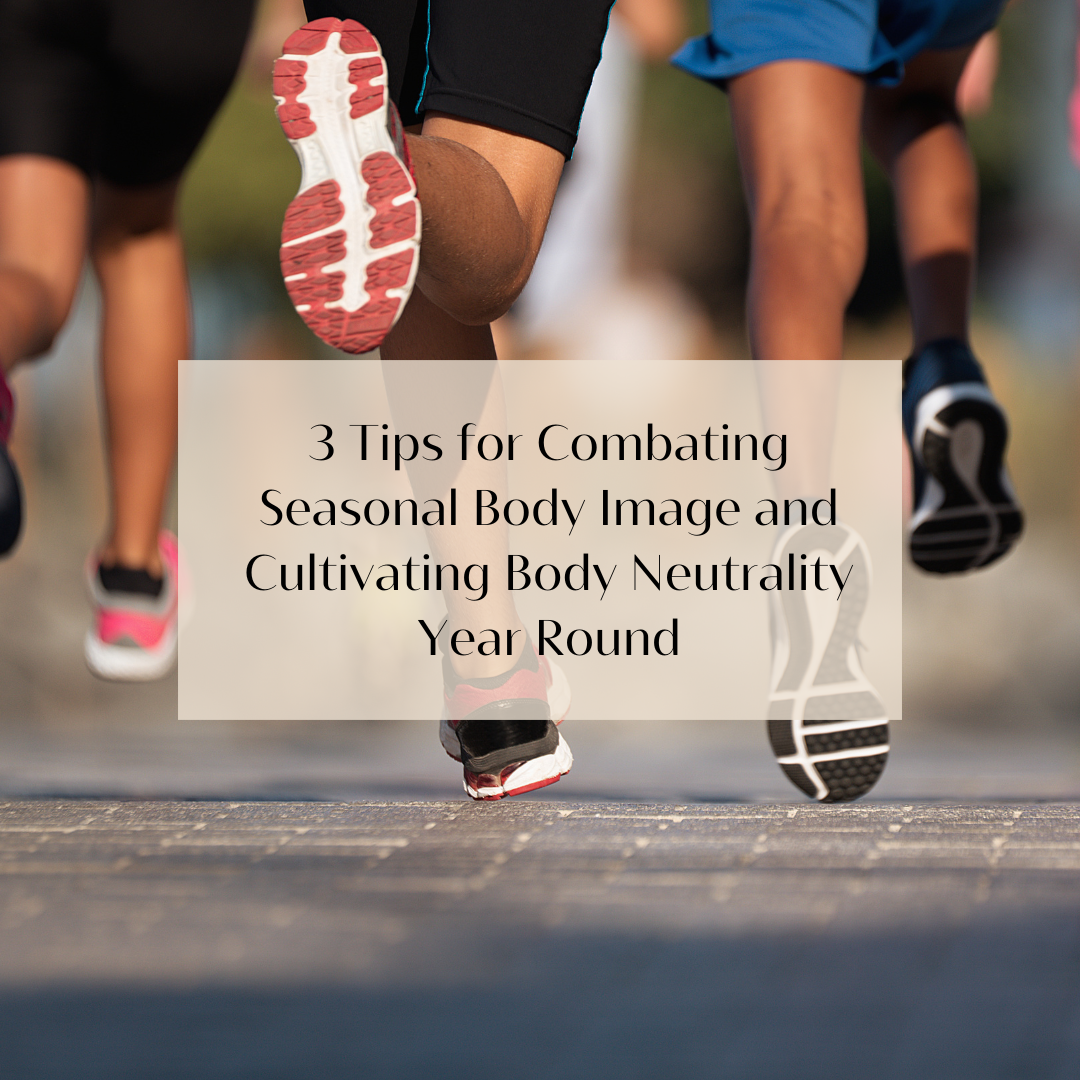
I recently ran my first-ever half marathon race. I’ve been training hard for the past 7 months leading up to the big day, juggling my regular strength training sessions with speed sessions, easy sessions, and of course, many long, slow-distance runs.
Here’s the cool thing. I’m well aware that my energy expenditure has skyrocketed with the addition of my half-marathon training, but not once have I thought about how it’s affecting my weight. All I care about right now is fueling myself for a successful race and that means I’ve actually increased my caloric intake to support my goals.
Of course, I’m well aware that things would be drastically different if this were all happening when I was in my late teens to early 20s.
Back then, I viewed running solely as a calorie-burning tool. It served no purpose other than to aid me in losing as much weight as possible and even though every run felt like a punishment, I kept at it for years. But I was never happy, even when the number I’d been aiming for flashed back at me on the scale – and my body image suffered immensely because of it.
This unhealthy relationship with my body was even worse during the summer months, a phenomenon that has since been termed “seasonal body image.”
Many people feel pressure to conform to certain appearance ideals when the weather heats up, especially from social media. It makes sense, especially considering that most of the summertime content you see on Instagram is designed to prey on our body anxieties: summer shredding challenges, ads for fat burners, and the empty promise that if your body aligned with societal and cultural norms, life would be perfect.
What I’ve learned over the years, from personal experience and as a professional coach, is that body image doesn’t exist on a spectrum. On any given day, how you think, feel, and behave towards your body can be positive, negative, a bit of both, or somewhere in between.Body image is nuanced and sensitive, which can make it really overwhelming. But there’s no reason you can’t cultivate a healthy appreciation for yourself and reach a point of body neutrality that holds strong year-round.
Here are three of my favorite strategies for calming body image fluctuations, learning to accept your body as it is, and flipping the script on society’s beauty standards.
- Curate your social media feed.
This is one of the first things I recommend when someone is struggling with body image – and I do get pushback. Sometimes, people insist that they follow a certain influencer, bodybuilder, or fitness personality for motivation, without realizing how this person is affecting their mood and self-perception.
Scrolling through an infinite amount of perfect images and videos that seem to defy reality can trigger comparison and make us wonder why we don’t measure up. It certainly did for me, back when I was running myself into the ground to look a certain way. It’s so important to build up a protective filter against content that has the potential to harm your body image and learn to think critically about what you’re seeing.
When you have some downtime, go through your social media feed and ask yourself the following questions about the posts you’re seeing:
→ What was the user’s motivation behind posting this?
→ What is the cost to me of pursuing the ideal depicted in this post or by this person?
→ Has this post been edited, photoshopped, or altered in any way?
→ Does this post acknowledge a diverse concept of beauty?
- Reflect on body functionality.
When you equate your worth with your physical appearance, it’s nearly impossible to bring your body image to a neutral place. Learning to decouple the two by reflecting on body functionality can change that.
Body functionality is everything your body is capable of. This includes physical capabilities, internal processes, bodily sensations, creative endeavors, personality traits, and communication with others.
The goal here is to find value in the things your body is capable of that have nothing to do with the way you look. When I take time to contemplate this, I imagine what life would be like if I wasn’t able to explore new cities on foot, push myself to improve my cardiovascular fitness, or cross that highly anticipated finish line in April (and give my husband the biggest hug as soon as I catch my breath!)
- Gradually expose yourself to body image fears.
Graded exposure is a psychological technique used to help people overcome avoidance of situations or activities due to fear or anxiety. It involves gradual exposure to a trigger until the negative feelings and associations start to fall away.
We use graded exposure with clients who are afraid that having certain foods in the house will lead to a binge. By incorporating these fear foods into meals and snacks on a consistent basis, the novelty of eating them wears off and these clients are eventually able to keep fear foods at home without expecting the worst.
The same thing goes for body image. If you have anxiety about looking in mirrors or wearing certain types of clothing, identify one small step you can take to gradually expose yourself to what’s driving the fear. Maybe you start by buying a pair of shorts and wearing them around the house. A week or two later, you wear them to the grocery store. And soon after that, you wear them out to lunch with a close friend.
Choosing vulnerability is tough and moving towards a more neutral place with your body image is an ongoing process. And while there’s no finish line per se, the fruit that comes from implementing the above tips will make you feel like you’ve won Olympic gold.
References:
Binder, A., Noetzel, S., Spielvogel, I., & Matthes, J. (2021). Context, Please?” The Effects of Appearance- and Health-Frames and Media Context on Body-Related Outcomes. Front Public Health, 9. doi: 10.3389/fpubh.2021.637354
Griffiths, S., Austen, E., Krug, I., & Blake, K. (2021). Beach body ready? Shredding for summer? A first look at seasonal body image. Body Image, 37, 269-281. doi: 10.1016/j.bodyim.2021.03.004
Schneider, K. (2023, June 26). Body Image & Weight Stigma in Fitness Spaces [PowerPoint Slides]
More Articles

How to Juggle Lifting & Running
by Rachel Pendakur, MA, CSCS,*D Balancing running and resistance training can feel like quite the puzzle, especially if you’re trying to improve in both. If you’ve ever trained for a […]

Sohee’s Fall Favorites
The past several months have been absolutely wild. I feel like I’ve been away more days than I’ve been home, having traveled the world for some exciting business opportunities, including […]
Death of the Dieting Paradigm: Prioritizing Health Over Weight
Take a moment to picture this: You walk into your doctor’s office for an appointment you made after noticing some uncharacteristic stomach pain. Upon arrival, the nurse directs you to […]

Sohee’s Summer Favorites
As a fitness educator, business owner, and PhD candidate, my days are typically jam-packed from start to finish. This summer, I’ve been making a conscious effort to slow down, stay […]